
Exploring the Health Synergy of Dietary Fiber and Protein
2026.10.07Exploring the Health Synergy of Dietary Fiber and Protein
Today’s food market is evolving toward more personalized nutritional solutions tailored to consumers’ life stages and lifestyles. As a result, the focus is shifting from individual nutrients toward the balance and synergy of multiple functional ingredients. In particular, with the growing well-aging trend, dietary fiber is gaining attention alongside protein, driving greater interest in nutritional solutions that deliver multiple complementary benefits.
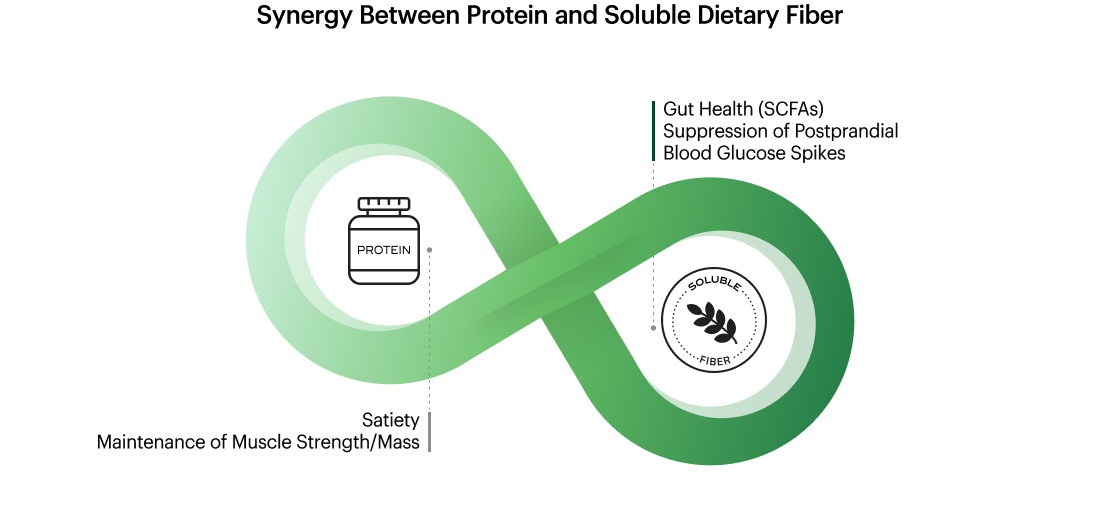
Complementary Benefits of Protein and Dietary Fiber: Gut Health
Protein is widely recognized for promoting satiety, providing essential amino acids, and supporting muscle maintenance and recovery. Dietary fiber, on the other hand, has traditionally been associated primarily with gut health, including improvements in the intestinal environment and bowel function. Combining the two may offer complementary nutritional benefits by supporting higher nutrient density, sustained satiety, and overall metabolic balance.
Research is also exploring whether dietary fiber may help complement some aspects of high-protein diets. Protein fermentation in the gut can generate metabolites such as ammonia, indoles, and hydrogen sulfide, and prolonged exposure to elevated levels of these metabolites may negatively affect intestinal and metabolic health. Dietary fiber may help promote a more favorable intestinal environment, and studies continue to investigate its potential role in balancing these effects.
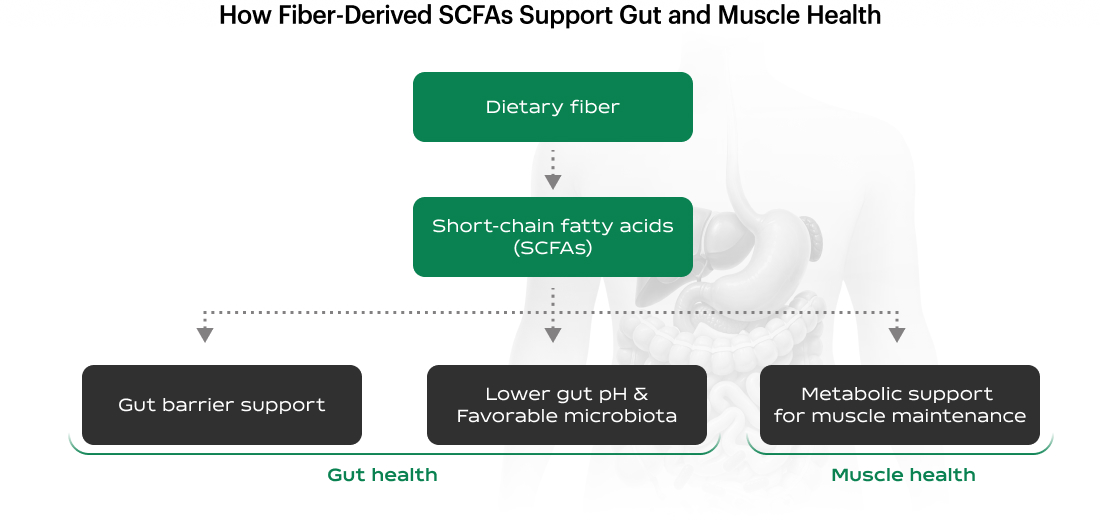
Beyond Gut Health: Dietary Fiber and Muscle Metabolism
Protein has long been considered a key nutrient for supporting muscle metabolism and maintaining muscle health. More recently, however, research has suggested that short-chain fatty acids (SCFAs) produced through the fermentation of soluble dietary fiber in the colon may also be linked to muscle metabolism and could contribute to the maintenance of muscle mass and function [1].
In this context, Fiberest®, a resistant maltodextrin, has also demonstrated anti-sarcopenic effects in an in vivo model [2]. As shown in Fig. 4, the reduction in muscle fiber cross-sectional area observed in the high-fat diet (HFD) group was restored by Fiberest® supplementation, with the actual area increasing by approximately 54.05% in the HFD+RMD group compared with the HFD group. Under both a standard chow diet (SCD) and HFD conditions, RMD supplementation improved muscle mass, muscle strength, and exercise endurance.
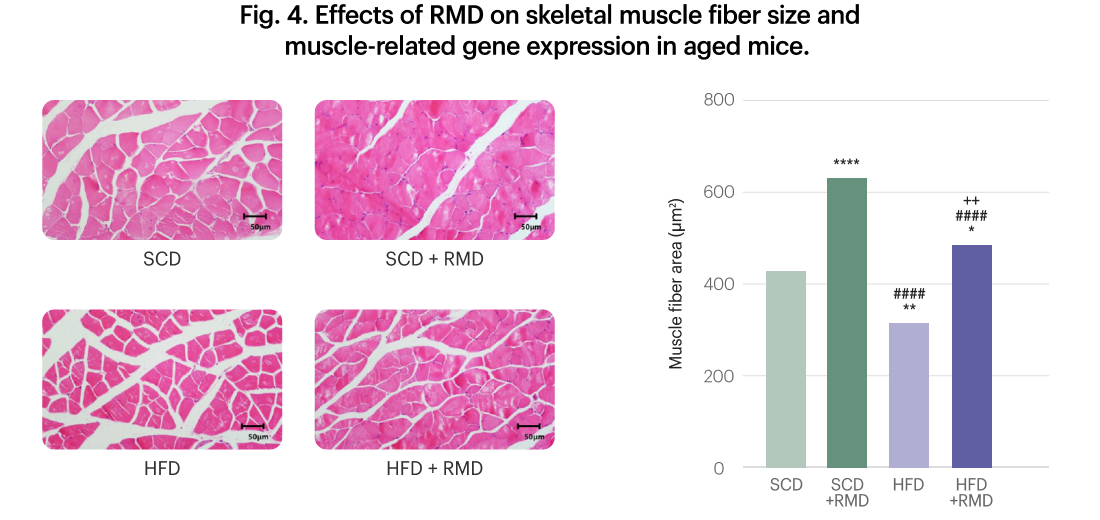
Hematoxylin and eosin staining of gastrocnemius muscle and quantification of
muscle fiber cross-sectional area in the four treatment groups.
While protein directly supports muscle protein synthesis by providing amino acids, dietary fiber may play a more indirect role by modulating the gut environment and the production of microbial metabolites, thereby helping create a metabolic environment favorable for muscle maintenance [3]. These findings suggest that dietary fibers such as RMD may have potential beyond conventional gut-health applications, contributing to a favorable metabolic environment for muscle health through the microbiota–gut–muscle axis.
From High Protein to Holistic Nutrition
The global nutrition market is increasingly moving beyond single-nutrient positioning toward more balanced formulations that combine protein with dietary fiber, vitamins, minerals, and other functional nutrients. This trend is not limited to well-aging. Across categories such as weight-management products, nutritional beverages, meal replacements, protein-based foods and supplements, and active nutrition, consumers are increasingly looking for solutions that address multiple nutritional needs simultaneously.
According to Mintel’s 2025–2026 global launch data, high/added protein and fiber claims are more prevalent in weight-management products than in senior-positioned products, suggesting that interest in protein and fiber extends beyond well-aging. While these figures do not necessarily indicate that both claims appeared together in the same products, they show that dietary fiber is already gaining relevance alongside protein across different areas of specialized nutrition—not only for older consumers.
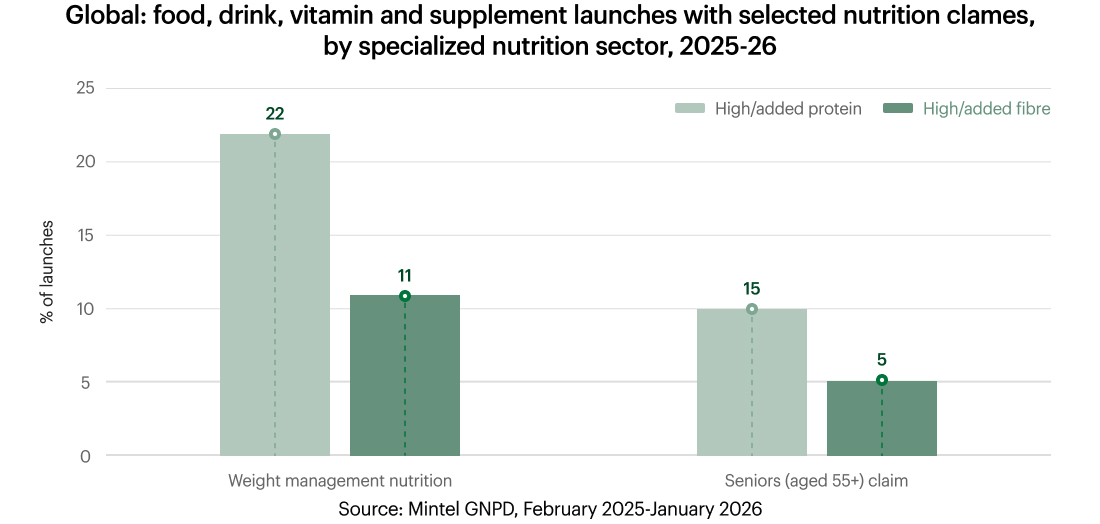
This shift suggests an opportunity to move beyond the conventional vew of protein as a standalone solution and toward more integrated nutritional approaches combining protein and dietary fiber, with potential benefits spanning satiety, gut health, metabolic health, and muscle maintenance.
Moving forward, Samyang Corporation will continue to explore the broader potential of Fiberest® Resistant Dextrin, including its complementary role alongside protein, to develop solutions that address diverse nutritional needs across different life stages and lifestyles.
[1] Fang J, Yan W, Sun X and Chen J (2025) The role of exercise-induced short-chain fatty acids in the gut–muscle axis: implications for sarcopenia prevention and therapy. Front. Microbiol. 16:1665551. doi: 10.3389/fmicb.2025.1665551
[2] Nam Y, Hwang H, Lim D, Cho E, Kim K, Sa S, Han J-S and Kim W (2026) Dietary resistant maltodextrin attenuates skeletal muscle atrophy in association with modulation of the microbiota–gut–muscle axis in aged mice. J. Microbiol. Biotechnol. 36:e2606037. doi: 10.4014/jmb.2606.06037
[3] Frampton J, Murphy KG, Frost G, Chambers ES. Short-chain fatty acids as potential regulators of skeletal muscle metabolism and function. Nat Metab. 2020 Sep;2(9):840-848. doi: 10.1038/s42255-020-0188-7. Epub 2020 Mar 30. PMID: 32694821.
If you also would like to know more about our product Fiberest® Resistant Dextrin.
Please feel free to contact us.